
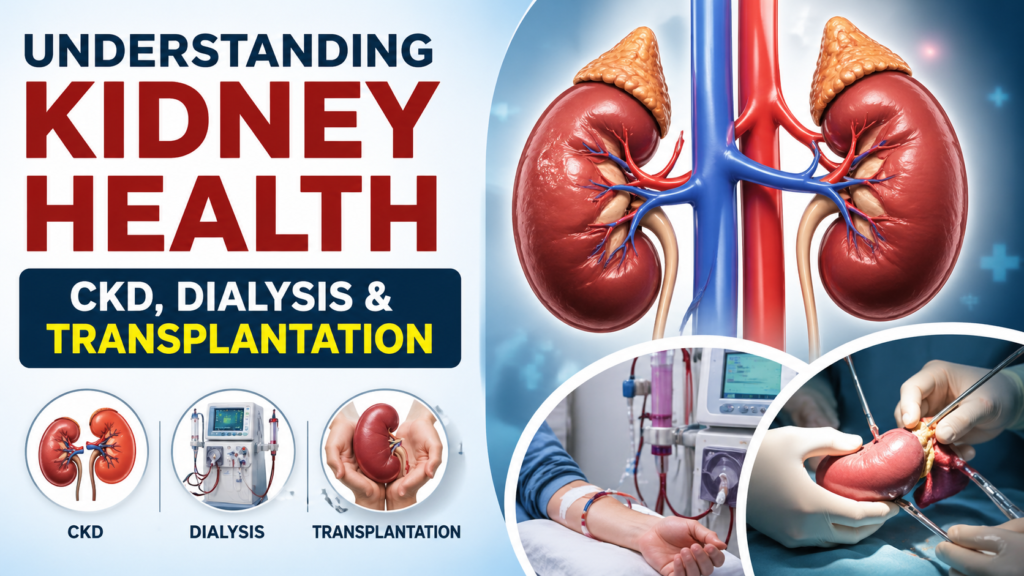
Understanding Kidney Health: CKD, Dialysis & Transplantation
- Chronic Kidney Disease (CKD): The Silent Progression
Chronic Kidney Disease (CKD) is a long-term condition where the kidneys gradually lose their ability to filter waste and excess fluids from the blood. Often called a “silent disease,” it may not show symptoms in the early stages.
What Causes CKD?
The most common causes include:
*Diabetes
*High blood pressure
*Recurrent kidney infections
*Genetic disorders
*Long-term use of certain medications
Common Symptoms (Later Stages)
*Fatigue and weakness
*Swelling in legs and ankles
*Loss of appetite
*Difficulty concentrating
*Changes in urination
Prevention & Management
Regular health check-ups (especially for diabetics & hypertensive patients)
Blood sugar and blood pressure control
Healthy diet (low salt, balanced protein)
Avoid unnecessary medications
Stay hydrated
Early detection is key. With proper care, progression can be slowed significantly.
- Dialysis: Supporting Life When Kidneys Struggle
When kidney function drops significantly, the body needs assistance to remove waste and maintain fluid balance. This is where Dialysis plays a crucial role.
What is Dialysis?
Dialysis is a medical process that performs the kidney’s filtering function artificially.
Types of Dialysis
*Hemodialysis: Blood is filtered using a machine, typically at a dialysis center.
*Peritoneal Dialysis: Uses the lining of the abdomen to filter blood, often done at home.
When is Dialysis Needed?
Dialysis is usually recommended in advanced CKD (end-stage kidney disease), when kidneys can no longer function effectively.
Living with Dialysis
Follow a strict diet and fluid plan
Maintain hygiene to avoid infections
Stick to treatment schedules
Stay physically active within limits
Dialysis is not a cure—but it helps sustain life and improve quality of living.
- Kidney Transplantation: A New Beginning
A Kidney Transplant is often considered the most effective long-term treatment for end-stage kidney disease.
What is a Kidney Transplant?
It involves replacing a failed kidney with a healthy kidney from a donor.
Types of Donors
Living donor (family member or compatible individual)
Deceased donor
Benefits of Transplantation
*Improved quality of life
*Fewer dietary restrictions
*Better energy and overall health
*Freedom from regular dialysis
Important Considerations
Lifelong medications (immunosuppressants)
Regular medical follow-ups
Risk of rejection or infection
A successful transplant can offer a near-normal life, but requires strict medical adherence.
Conclusion:
Taking Charge of Kidney Health
Kidney health is vital to overall well-being. From early detection of CKD, to life-sustaining dialysis, and transformative transplantation, modern medicine offers multiple pathways to manage kidney disease effectively.
At Renasta Lifesciences Pvt Ltd, we believe that awareness and education are the first steps toward better health outcomes.
Disclaimer
This content is for educational purposes only and should not be considered medical advice. Please consult a qualified healthcare professional for diagnosis and treatment.