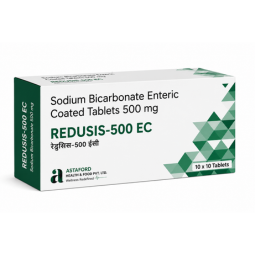
REDUSIS 500 / REDUSIS DS
(Sodium Bicarbonate 500 mg / 1000 mg – Enteric Coated Tablet)
Metabolic Acidosis Correction Therapy in CKD
PRODUCT INTRODUCTION
Brand Name: REDUSIS 500 / REDUSIS DS
Composition:
- Sodium Bicarbonate 500 mg (EC)
- Sodium Bicarbonate 1000 mg (DS – EC)
Category: Systemic Alkalinizing Agent
CLINICAL BACKGROUND (FOR MR UNDERSTANDING)
In CKD Stage 3–5:
- Kidneys cannot excrete acid efficiently
- Serum bicarbonate falls (<22 mEq/L)
- Metabolic acidosis develops
- Muscle wasting increases
- CKD progression accelerates
👉 Correction of metabolic acidosis slows CKD progression.
MODE OF ACTION (MOA)
- Sodium bicarbonate dissociates → bicarbonate ions released
- Buffers excess hydrogen ions
- Raises serum bicarbonate level
- Corrects metabolic acidosis
Clinical Effects:
✔ Improves muscle protein balance
✔ Slows GFR decline
✔ Reduces bone buffering
✔ Improves nutritional status
INDICATIONS
- Metabolic acidosis in CKD
- Serum bicarbonate <22 mEq/L
- Dialysis patients with acidosis
- Chronic renal tubular acidosis
DOSAGE
- REDUSIS 500: Mild acidosis
- REDUSIS DS (1000 mg): Moderate to severe acidosis
Dose adjusted based on serum bicarbonate levels
As prescribed by nephrologist
FEATURE – ADVANTAGE – BENEFIT (FAB)
🔹 Feature
Enteric-coated sodium bicarbonate tablet
🔹 Advantage
Reduced gastric irritation
🔹 Benefit
Better patient compliance & sustained correction
USP
✔ Enteric-coated formulation
✔ GI-friendly
✔ CKD-specific positioning
✔ Supports dialysis delay strategy
✔ Cost-effective long-term therapy
SAFETY PROFILE
- Monitor sodium levels
- Monitor blood pressure
- Risk of fluid retention in CHF
- Avoid overcorrection (metabolic alkalosis)
MEGAFORD 160
(Megestrol Acetate 160 mg Tablet)
Appetite Restoration & Cachexia Management Therapy
PRODUCT INTRODUCTION
Brand Name: MEGAFORD 160
Generic Name: Megestrol Acetate 160 mg
Category:Progestational Appetite Stimulant
CLINICAL BACKGROUND (FOR MR UNDERSTANDING)
Loss of appetite & weight loss common in:
- CKD patients
- Dialysis patients
- Cancer cachexia
- Elderly patients
- Chronic infections
- Post-surgery recovery
Malnutrition leads to:
- Muscle wasting
- Poor immunity
- Delayed recovery
- Poor quality of life
👉 Appetite stimulation improves overall prognosis.
MODE OF ACTION (MOA)
Megestrol Acetate is a synthetic progestin.
Mechanism:
- Stimulates appetite via hypothalamic action
- Increases neuropeptide Y
- Promotes weight gain
- Improves caloric intake
- Has anti-cachectic effect
Clinical Result:
✔ Increased appetite
✔ Weight gain
✔ Improved nutritional status
✔ Better treatment compliance
INDICATIONS
- Cancer cachexia
- CKD-related malnutrition
- Dialysis-related weight loss
- HIV-associated wasting
- Geriatric anorexia
- Chronic illness-related anorexia
DOSAGE
- 160 mg once daily
- Dose may vary as per indication
- As prescribed by physician
FEATURE – ADVANTAGE – BENEFIT (FAB)
🔹 Feature
Potent appetite stimulant (Progestational therapy)
🔹 Advantage
Stimulates central appetite pathways
🔹 Benefit
Improved weight, strength & recovery
USP
✔ Proven appetite stimulant
✔ Effective in cachexia
✔ Once-daily dosing
✔ Improves nutritional compliance
✔ Useful in CKD & oncology segment
SAFETY PROFILE
- Possible weight gain
- Fluid retention (monitor in cardiac patients)
- Rare thromboembolic risk
- Monitor long-term use
Generally well tolerated under supervision.
- Key positioning? → Appetite restoration therapy
ASTAFEB 40
(Febuxostat 40 mg Tablet)
Structured in the same professional template as your previous products.
📘 ASTAFEB 40 TRAINING MANUAL
Advanced Uric Acid Control in CKD & Metabolic Patients
PRODUCT INTRODUCTION
Brand Name: ASTAFEB 40
Composition: Febuxostat 40 mg
Category: Xanthine Oxidase Inhibitor
TAGLINE & PUNCHLINE
Tagline:
👉Precision Uric Acid Control
Punchline:
👉Lower Uric. Protect the Kidney.
CLINICAL BACKGROUND
In CKD & Metabolic Syndrome patients:
- Hyperuricemia is common
- Uric acid contributes to:
- Endothelial dysfunction
- Hypertension
- CKD progression
- Gout attacks
Allopurinol limitations:
- Dose adjustment in CKD
- Hypersensitivity risk
- Variable uric acid control
👉 Febuxostat offers more consistent uric acid reduction.
MODE OF ACTION (MOA)
- Selective Xanthine Oxidase Inhibitor
- Blocks conversion of:
- Hypoxanthine → Xanthine
- Xanthine → Uric Acid
Clinical Effects:
✔ Reduces serum uric acid
✔ Prevents gout flares
✔ Supports renal protection
✔ Improves endothelial function
INDICATIONS
- Chronic hyperuricemia
- Gout
- CKD patients with high uric acid
- Diabetic nephropathy with hyperuricemia
- Hypertensive patients with elevated uric acid
DOSAGE
- 40 mg once daily
- Dose may be titrated as per physician
- Can be taken with or without food
FEATURE – ADVANTAGE – BENEFIT (FAB)
🔹 Feature
Selective xanthine oxidase inhibition
🔹 Advantage
Stronger uric acid reduction vs conventional therapy
🔹 Benefit
Better gout control & renal protection
USP
✔ More potent uric acid reduction
✔ Effective in CKD (mild–moderate)
✔ Once-daily dosing
✔ Lower hypersensitivity risk vs allopurinol
SAFETY PROFILE
- Monitor liver function tests
- Initial gout flare possible
- Use cautiously in severe cardiovascular disease
- Dose adjustment based on renal status as per guidelines