
Oncology Supportive Care: Protecting More Than Cancer—Protecting the Whole Patient
A Holistic Approach to Improving Outcomes, Preserving Organ Function, and Enhancing Quality of Life
Cancer treatment has evolved dramatically over the past two decades. While advances in surgery, chemotherapy, immunotherapy, and targeted therapies have significantly improved survival rates, these treatments often come with systemic complications that affect multiple organs. As a result, supportive care has become an integral part of modern oncology, focusing not only on treating the cancer but also on preserving the patient’s overall health, functional status, and quality of life.
At Renasta Lifesciences, we believe that every cancer patient deserves comprehensive care that addresses nutritional deficiencies, anemia, kidney protection, metabolic balance, and recovery throughout their treatment journey.
Cancer Affects the Entire Body—Not Just One Organ
Cancer is a systemic disease. Beyond the primary tumor, it impacts nearly every major organ system either directly or indirectly through inflammation, metabolic disturbances, or treatment-related toxicity.
Hematological System
Cancer and chemotherapy commonly suppress bone marrow, leading to:
- Iron deficiency anemia
- Functional anemia
- Fatigue and weakness
- Reduced oxygen delivery to tissues
- Poor exercise tolerance
Anemia affects nearly 40–70% of patients receiving chemotherapy, significantly reducing quality of life and treatment tolerance.
Renal System
The kidneys are especially vulnerable during cancer treatment.
Renal impairment may occur due to:
- Chemotherapy-induced nephrotoxicity (e.g., Cisplatin)
- Tumor Lysis Syndrome (TLS)
- Dehydration
- Sepsis
- Hyperuricemia
- Obstructive uropathy
- Pre-existing diabetes or hypertension
Many oncology patients ultimately develop Acute Kidney Injury (AKI) or Chronic Kidney Disease (CKD), making renal protection an essential component of supportive care.
Cardiovascular System
Cancer therapies can also affect the heart and blood vessels.
Potential complications include:
- Hypertension
- Cardiotoxicity
- Heart failure
- Arrhythmias
- Thromboembolism
Close monitoring of cardiovascular health is therefore essential, especially in elderly patients and those with existing heart disease.
Nutritional and Musculoskeletal System
Cancer significantly alters metabolism.
Patients frequently experience:
- Cancer cachexia
- Protein-energy wasting
- Loss of muscle mass
- Weight loss
- Poor appetite
- Weakness
- Frailty
Without nutritional intervention, patients often tolerate chemotherapy poorly and experience delayed recovery.
Metabolic System
Rapid tumor breakdown during chemotherapy may result in Tumor Lysis Syndrome (TLS), characterized by:
- Hyperuricemia
- Hyperphosphatemia
- Hyperkalemia
- Acute kidney injury
- Cardiac arrhythmias
Early recognition and management are critical to prevent life-threatening complications.
The Growing Importance of Supportive Oncology Care
Supportive oncology is no longer optional—it is a cornerstone of comprehensive cancer management.
Its objectives include:
- Reducing treatment-related toxicity
- Preserving organ function
- Improving nutritional status
- Correcting anemia
- Protecting kidney function
- Enhancing treatment compliance
- Improving quality of life
When supportive care is integrated early, patients are more likely to complete planned cancer therapy with fewer interruptions and better outcomes.
Renasta Lifesciences: A Trusted Partner in Oncology Supportive Care
Rather than positioning ourselves solely as a nephrology-focused company, Renasta Lifesciences is committed to being a comprehensive supportive care partner, helping oncologists manage the systemic complications of cancer and its treatment.
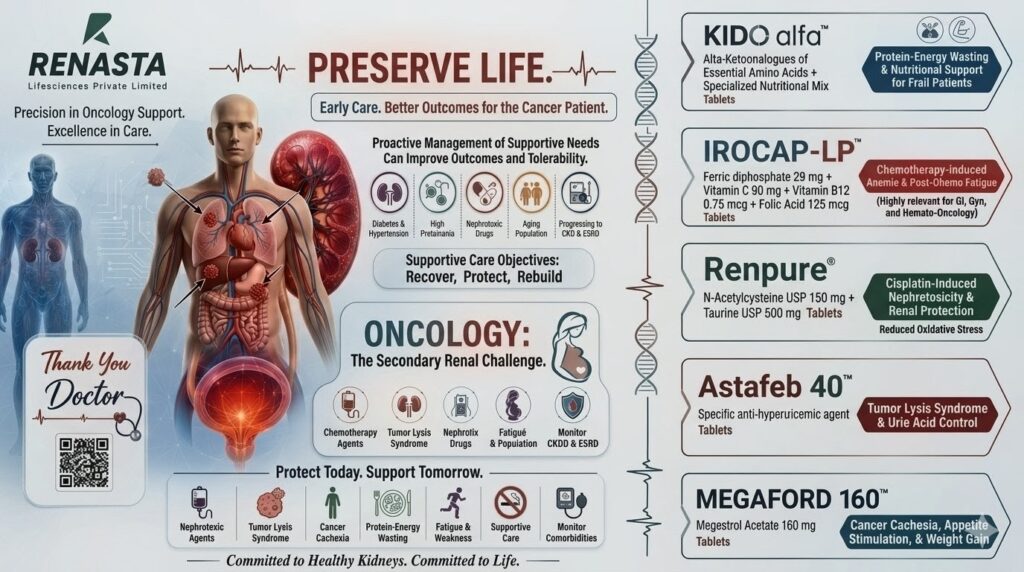
IROCAP-LP™
Smarter Iron Delivery for Chemotherapy-Induced Anemia
Iron deficiency and anemia are common in cancer patients due to chemotherapy, chronic inflammation, nutritional deficiencies, and blood loss.
IROCAP-LP™ is well suited for:
- Chemotherapy-induced anemia
- Nutritional anemia
- Iron deficiency
- Post-chemotherapy fatigue
- Recovery support
It is particularly valuable in:
- Gynecologic Oncology
- Gastrointestinal Oncology
- Hemato-Oncology
By supporting hemoglobin levels, IROCAP-LP™ may help improve energy, oxygen delivery, and overall patient well-being.
MEGAFORD 160™
Supporting Appetite and Recovery
Cancer cachexia remains one of the most challenging complications in oncology.
Patients frequently experience:
- Appetite loss
- Severe weight loss
- Muscle wasting
- Fatigue
- Poor nutritional intake
MEGAFORD 160™ plays an important supportive role by helping improve appetite and nutritional intake, making it a valuable option in supportive and palliative oncology care.
Renpure®
Renal Protection Through Antioxidant Support
Cancer therapies, particularly platinum-based chemotherapy, can increase oxidative stress and contribute to renal injury.
Renpure® may support:
- Oxidative stress reduction
- Renal protection
- CKD-oncology overlap
- Elderly oncology patients
- Cisplatin-treated patients
Astafeb 40™
Managing Hyperuricemia and Tumor Lysis Syndrome Risk
Rapid destruction of tumor cells may increase serum uric acid levels, potentially leading to acute kidney injury.
Astafeb 40™ can be discussed selectively for:
- Hyperuricemia
- Tumor Lysis Syndrome risk
- Hemato-oncology supportive care
KIDO alfa™
Nutritional Support for Frail Oncology Patients
Protein-energy wasting and malnutrition significantly affect treatment outcomes.
KIDO alfa™ supports:
- Nutritional recovery
- Protein-energy wasting
- Frail cancer patients
- Oncology patients with renal impairment
It is especially relevant in patients requiring nutritional optimization while minimizing metabolic burden.
Who Should We Meet?
Renasta’s supportive care portfolio is most relevant for:
- Hemato-Oncologists
- Medical Oncologists (Onco-Physicians)
- Supportive Care Clinics
- Palliative Care Specialists
- Hospitals managing chemotherapy patients
While opportunities exist across oncology, the greatest impact is expected in specialties where supportive care and long-term management are integral to patient outcomes.
Our Positioning: A Supportive Care Partner
Renasta Lifesciences is not approaching oncologists as a “Nephrology Company.”
Instead, our focus is on delivering value through:
- Nutritional recovery support
- Renal-safe adjunctive therapy
- Anemia management
- Appetite and weight support
- Kidney protection during chemotherapy
- Quality-of-life improvement
This patient-centric approach aligns with the evolving needs of modern oncology practice and strengthens collaboration with healthcare professionals.
Conclusion
Successful cancer care extends far beyond tumor control. Preserving kidney function, correcting anemia, supporting nutrition, managing metabolic complications, and improving quality of life are essential components of comprehensive oncology care.
By integrating supportive therapies alongside standard cancer treatment, healthcare professionals can help patients tolerate therapy better, recover faster, and maintain dignity throughout their cancer journey.
Renasta Lifesciences Pvt. Ltd. remains committed to partnering with oncologists in delivering holistic, evidence-based supportive care—because every step toward recovery deserves comprehensive support.