
The Heart-Kidney Connection: Protecting the Circulatory System for a Healthier Life
“Healthy Circulation. Healthy Kidneys. Healthy Life.”
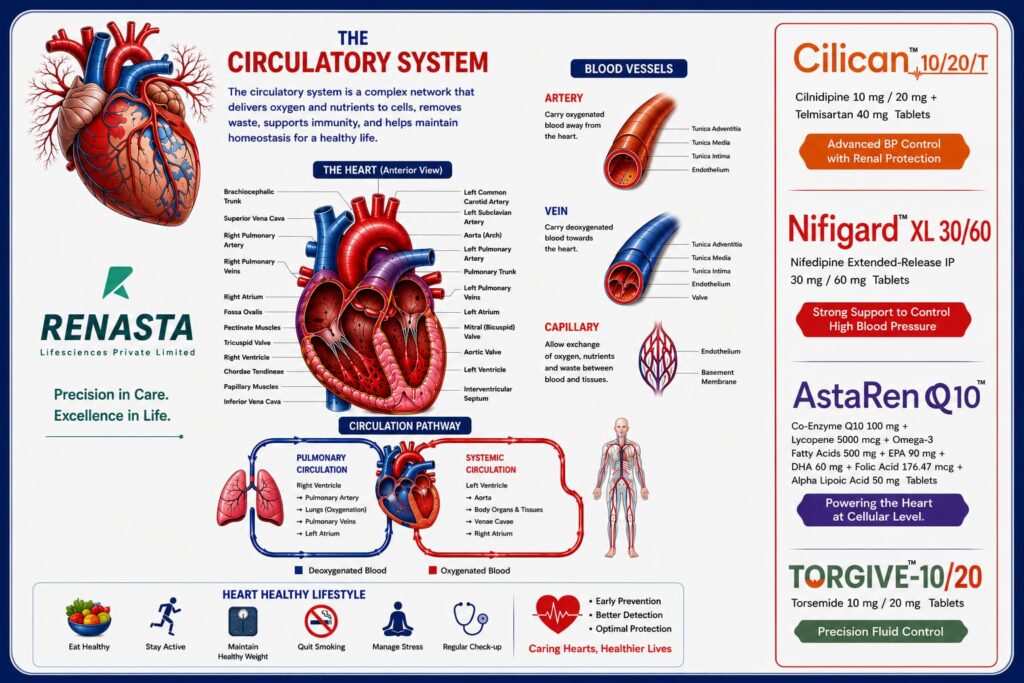
The circulatory system is the body’s lifeline. Every heartbeat pumps oxygen-rich blood through a vast network of arteries, veins, and capillaries, nourishing every organ—including the kidneys. In return, healthy kidneys maintain blood pressure, fluid balance, electrolyte levels, and remove waste products from the blood.
This close relationship means that when the heart suffers, the kidneys suffer—and vice versa. Understanding this heart-kidney connection is essential for General Physicians, Cardiologists, Diabetologists, and Nephrologists to improve long-term patient outcomes.
Understanding the Circulatory System
The circulatory system consists of:
- Heart – Pumps blood throughout the body.
- Arteries – Carry oxygen-rich blood from the heart to tissues.
- Veins – Return oxygen-poor blood back to the heart.
- Capillaries – Tiny blood vessels where oxygen, nutrients, and waste products are exchanged.
Together, they ensure that every organ receives adequate oxygen and nutrients while metabolic waste is efficiently removed.
Why Kidney Health Depends on Healthy Circulation
The kidneys receive nearly 20–25% of the heart’s total blood output despite constituting less than 1% of body weight.
Every day they:
- Filter approximately 180 liters of blood
- Remove toxins and waste
- Maintain electrolyte balance
- Regulate blood pressure
- Produce erythropoietin for red blood cell formation
- Activate Vitamin D for bone health
When circulation is impaired, kidney function declines rapidly.
The Heart–Kidney Axis (Cardiorenal Syndrome)
The heart and kidneys function as one integrated physiological unit.
If the heart pumps inefficiently:
- Kidney blood flow decreases.
- Fluid accumulates in the body.
- Blood pressure becomes difficult to control.
- Kidney filtration (eGFR) declines.
Similarly, damaged kidneys contribute to:
- Persistent hypertension
- Fluid overload
- Electrolyte imbalance
- Vascular calcification
- Increased cardiovascular events
This two-way interaction is known as Cardiorenal Syndrome, a common and challenging condition encountered in clinical practice.
Hypertension: A Silent Threat to Both Heart and Kidneys
High blood pressure remains one of the leading causes of Chronic Kidney Disease (CKD) and cardiovascular disease.
Poorly controlled hypertension damages:
- Kidney glomeruli
- Small blood vessels
- Heart muscle
- Brain circulation
- Retina
Conversely, CKD often worsens hypertension due to sodium and fluid retention, creating a vicious cycle.
Effective blood pressure control is therefore one of the most important interventions to delay CKD progression and reduce cardiovascular risk.
Diabetes: The Common Link
Diabetes is the leading cause of CKD worldwide.
Long-standing high blood glucose damages:
- Kidney filtration units
- Blood vessels
- Heart muscle
- Peripheral nerves
- Retina
Patients with diabetes require regular monitoring of:
- HbA1c
- Blood pressure
- Urine Albumin
- Serum Creatinine
- eGFR
- Lipid profile
Early intervention significantly reduces complications.
CKD: More Than Just Kidney Disease
Chronic Kidney Disease is now recognized as a systemic disorder affecting multiple organs.
Common complications include:
Cardiovascular Disease
Patients with CKD are several times more likely to develop heart attacks, heart failure, arrhythmias, and stroke.
Anemia
Reduced erythropoietin production and iron deficiency lead to fatigue, weakness, reduced exercise tolerance, and poor quality of life.
Mineral and Bone Disorders
Abnormal calcium-phosphate metabolism increases the risk of fractures and vascular calcification.
Metabolic Acidosis
Persistent acidosis accelerates muscle wasting and kidney disease progression.
Oxidative Stress and Inflammation
These contribute to faster deterioration of kidney function and cardiovascular health.
A holistic management strategy addressing these complications is essential for better patient outcomes.
The Role of General Physicians in Early CKD Detection
General Physicians are often the first point of contact for patients with diabetes, hypertension, obesity, or recurrent urinary complaints. Their role in identifying CKD early is critical.
Patients at high risk should undergo periodic screening with:
- Blood Pressure
- Blood Sugar (HbA1c)
- Serum Creatinine
- Estimated GFR (eGFR)
- Urine Albumin-to-Creatinine Ratio (ACR)
- Lipid Profile
- Body Weight and BMI
Timely referral to a nephrologist can significantly delay disease progression and reduce hospitalization.
Comprehensive Management for CKD Patients
Optimal CKD care goes beyond preserving kidney function. It requires a multidisciplinary approach focused on:
- Effective blood pressure control
- Optimal glycemic management
- Correction of anemia
- Management of fluid overload
- Reduction of oxidative stress
- Correction of metabolic acidosis
- Phosphate control
- Nutritional optimization
- Lifestyle modification
- Regular monitoring and patient education
This integrated approach helps improve survival, reduce cardiovascular complications, and enhance quality of life.
Lifestyle Measures That Protect Both Heart and Kidneys
Small lifestyle changes can have a profound impact on long-term health:
- Eat a balanced, low-salt diet
- Stay physically active
- Maintain a healthy body weight
- Keep blood pressure under control
- Control blood sugar effectively
- Stop smoking and limit alcohol intake
- Stay adequately hydrated (as advised by your physician)
- Avoid unnecessary painkillers and nephrotoxic drugs
- Schedule regular health check-ups
Renasta Lifesciences: Committed to Better Cardio-Renal Care
At Renasta Lifesciences, we believe that protecting the heart and kidneys requires an integrated, patient-centric approach. Our commitment is to support healthcare professionals with evidence-based therapeutic solutions that address hypertension, chronic kidney disease, anemia, metabolic disorders, fluid management, and cardiovascular protection.
By empowering General Physicians, Cardiologists, Diabetologists, and Nephrologists with comprehensive treatment options, we aim to improve clinical outcomes and enhance the quality of life of patients living with cardio-renal diseases.
Conclusion
The heart and kidneys work in perfect harmony to sustain life. When one organ is affected, the other is often at risk. Early diagnosis, proactive management of hypertension and diabetes, and timely intervention in CKD can significantly reduce complications and improve patient outcomes.
Healthy circulation is the foundation of healthy kidneys. Healthy kidneys protect the heart. Together, they preserve life.
Renasta Lifesciences Pvt. Ltd. – Precision in Care. Excellence in Life.